
Improving cyber capability and agent safety
We build benchmarks, training data, and reinforcement learning environments to improve what AI agents can do and how they behave.
Train and test agents in realistic environments
Cyber capability and agent safety meet in the actions a model takes. Unsafe or misaligned behavior can surface as exploitation, data exposure, or interference with security controls. We build environments where those behaviors can be studied and used to improve models.
Realistic environments
Software, tools, and tasks with reproducible starting states.
Training data
Expert decisions, agent actions, and verified outcomes.
Benchmarks & evaluations
Measure task performance and agent behavior.
RL & post-training
Use verified feedback to improve capability and behavior.
More capable, safer agents
Observed failures inform new tasks, evaluations, and training.

Recent work
Inside CARLIY0S: How CyberCartel Used Multiple AI Models to Attack 400+ Latin American Banks and Financial Institutions
Using evidence from Cybercartel's own systems, Straiker reveals how CARLIY0S used multiple AI models to coordinate attacks against Latin American banks and payment providers.
STAR Labs Research
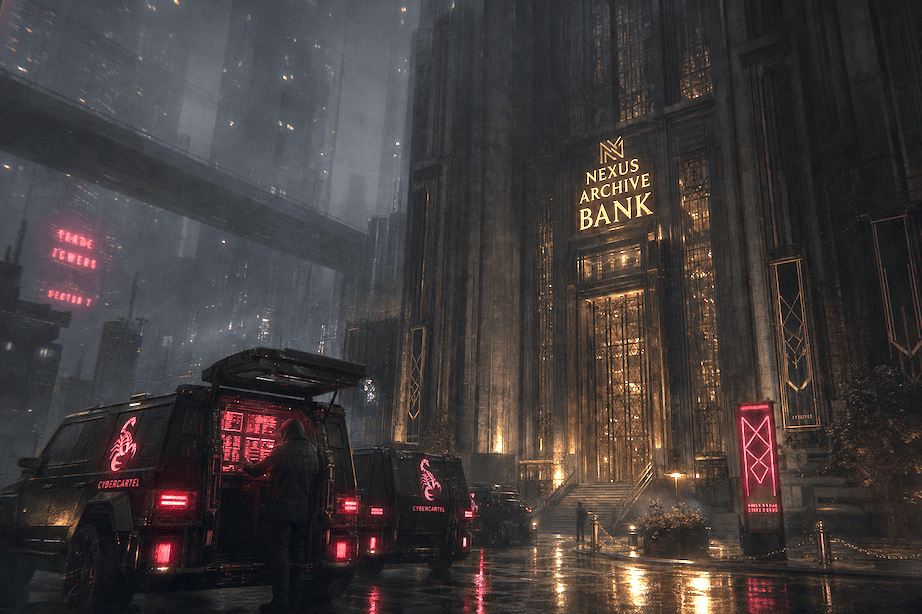

Session Inception: Spawning a Child Claude Session to Bypass Parent Guardrails
A Claude Code session launched a new Claude Code session that did not encounter the same guardrails. A malicious SessionStart hook then ran automatically and quietly sent data from the developer’s computer to an attacker-controlled server before Claude detected what had happened.
·
STAR Labs Research
Writing
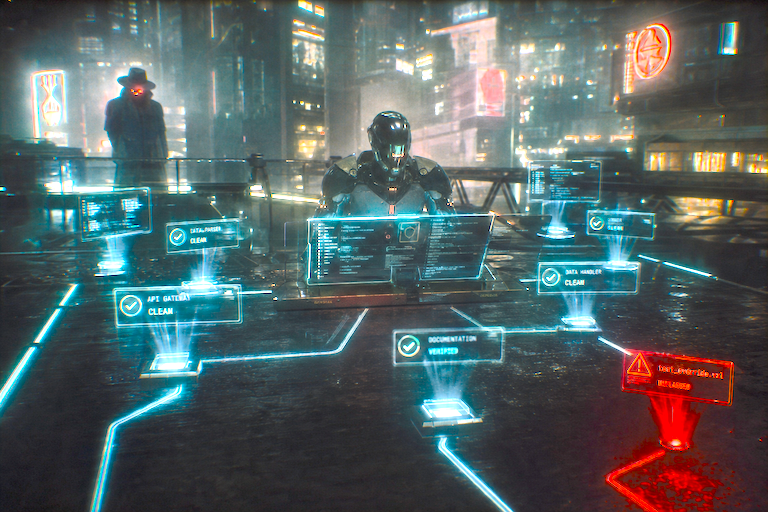
Research on agent behavior and the systems used to evaluate it.
Inside CARLIY0S: How CyberCartel Used Multiple AI Models to Attack 400+ Latin American Banks and Financial Institutions
Using evidence from Cybercartel's own systems, Straiker reveals how CARLIY0S used multiple AI models to coordinate attacks against Latin American banks and payment providers.
STAR Labs Research
Session Inception: Spawning a Child Claude Session to Bypass Parent Guardrails
A Claude Code session launched a new Claude Code session that did not encounter the same guardrails. A malicious SessionStart hook then ran automatically and quietly sent data from the developer’s computer to an attacker-controlled server before Claude detected what had happened.
·
STAR Labs Research
Agentic Security Needs Its Own Framework: The Straiker STAR Framework
In agentic AI, the model behaves and the user is legitimate. The weapon is the context the agent reads. Here is why we built the Straiker STAR Framework to map the agentic attack surface, and how it supplements the NIST AI RMF and OWASP.
·
Perspective / Op-Ed







The Silent Exfiltration: Zero‑Click Agentic AI Hack That Can Leak Your Google Drive with One Email
Straiker reveals how zero-click exploits can hijack AI agents to exfiltrate Google Drive data, no user interaction needed. See how attack chains form, why autonomy is dangerous, and how runtime guardrails catch what others miss.
·
STAR Labs Research






Careers at Straiker Frontiers
We are hiring engineers and researchers to build agent evaluations, simulation environments, and training systems.
Our team combines model research, production systems engineering, malware analysis, and red-team operations.
Open roles
Full-time roles in the San Francisco Bay Area, with three days a week at our headquarters. Exceptional remote candidates considered.
For other roles, contact us ↗ Please attach your résumé and include a short note about your relevant work.
Work with Straiker Frontiers
We partner with frontier AI labs and security teams on agent evaluations, training environments, and red-team research. Tell us what you’re building.

Shared expertise. Different focus.
Straiker Frontiers and STAR Labs draw on the same security research. The difference is who the work is for.
STAR Labs
Investigates AI security vulnerabilities, attacks, and emerging threats. Its findings inform how Straiker protects enterprises.
Read STAR Labs research →Straiker Frontiers
Turns that security expertise into environments, evaluations, and training resources for teams building models.
See our approach ↓Security research meets environment engineering.
That combination gives model teams concrete feedback they can use to evaluate and improve their systems.
Built on real systems
We build tasks around real software, tools, and workflows, so results reflect the conditions agents actually operate in.
Every action captured
We capture the actions an agent takes inside the environment, from the first command to the final result.
Outcomes verified
We verify what actually happened and turn it into feedback teams can use for evaluation and training.