
Secure ChatGPT, Codex, and OpenAI Models Everywhere
Your teams use OpenAI through ChatGPT, ChatGPT Work, Codex, the desktop, terminal, IDE, and custom applications and agents. Straiker secures every one of those environments, detects attacks at runtime, and gives you the trace to investigate and block. Wherever your teams use OpenAI models, Straiker is there.


HOW IT WORKS
How Straiker secures ChatGPT, Codex, and OpenAI models
Straiker secures OpenAI wherever your teams use it. We use the OpenAI Compliance Platform for ChatGPT, execution-path controls for Codex, and inline gateways and inference hooks for OpenAI models inside custom apps and agents. Straiker detects, traces, and blocks risky behavior without changing how OpenAI itself works.
OpenAI Codex
Straiker action
Block inline
How
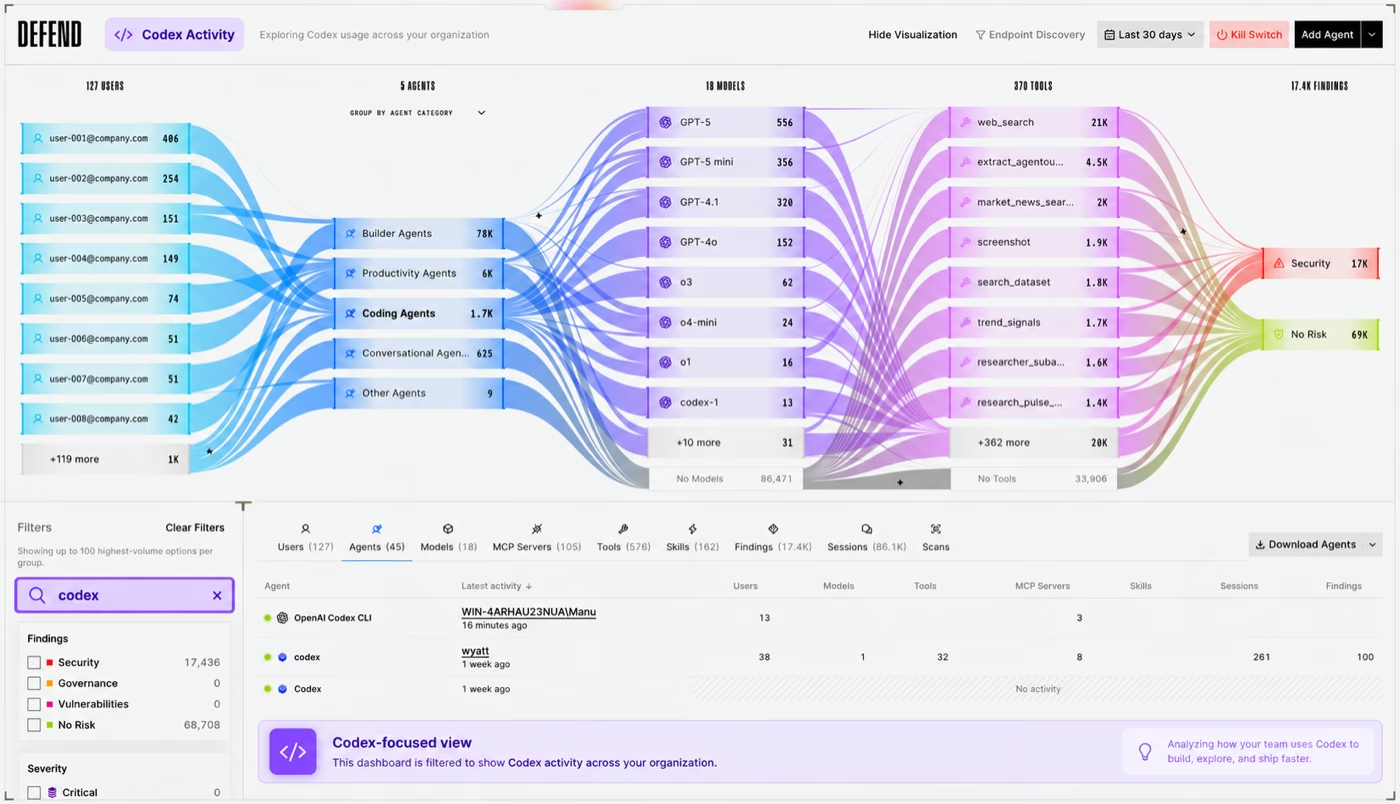
Straiker secures OpenAI Codex by inspecting agent activity and blocking risky tool calls before they execute. This covers Codex across CLI, IDE, desktop, and cloud workflows.
CHATGPT CHAT + WORK
Straiker action
Detect and trace
How
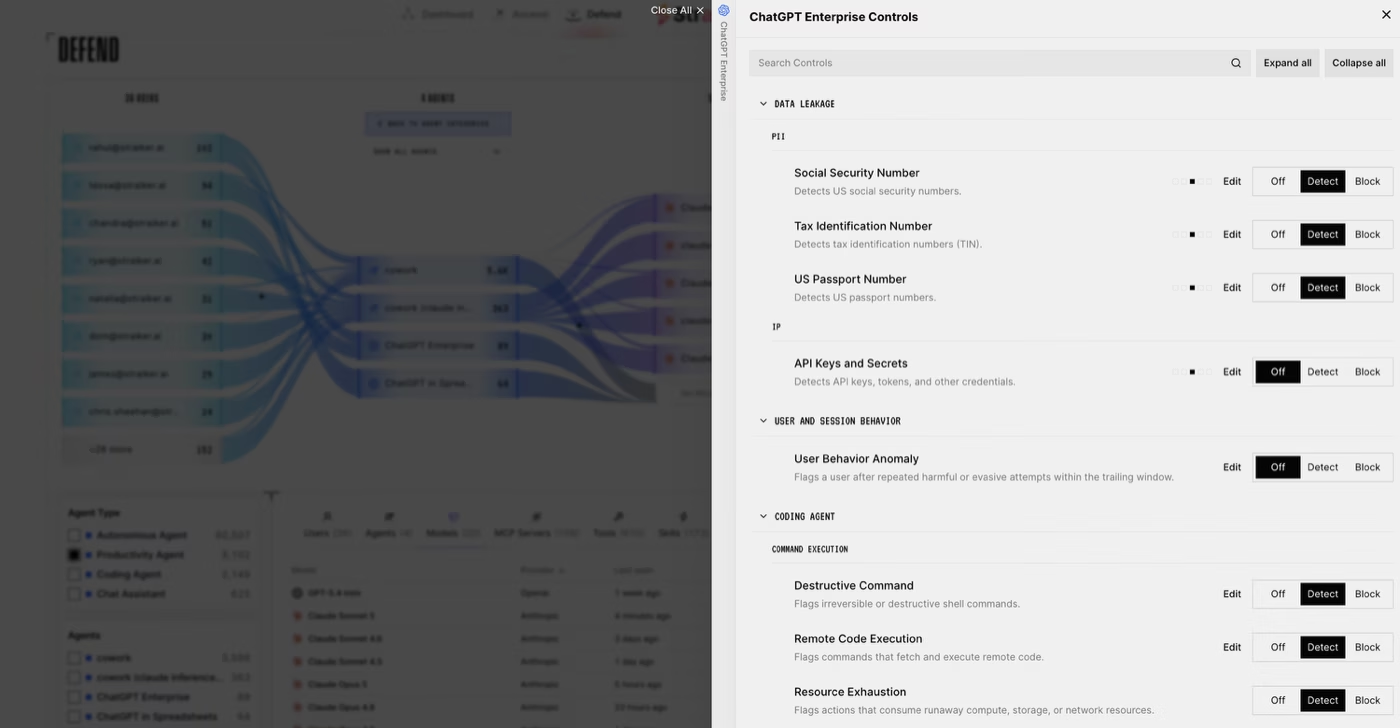
Straiker secures ChatGPT by monitoring enterprise activity, detecting risky behavior, and reconstructing the full session for investigation. This covers ChatGPT chat, Work, web, and desktop experiences where supported telemetry is available.
OPENAI API + CUSTOM APPS
Straiker action
Block inline
How
Straiker secures applications and agents built on OpenAI models by inspecting model traffic and agent actions inline and blocking malicious behavior before it executes. This protects OpenAI models even when they are embedded inside a company’s own application or agent.
COVERAGE
How Straiker works with OpenAI
Attacks do not pick one surface. A prompt injection can arrive in a ChatGPT conversation, a Codex coding session, a connected tool, or content an agent reads on your behalf. Straiker covers the surface and the path.
OPENAI SURFACES WE SECURE
ChatGPT
ChatGPT Work
Codex from OpenAI
OpenAI models in custom apps
OpenAI-powered agents
ATTACK PATHS WE WATCH
Direct and multi-turn prompt injection
Indirect prompt injection through skills, connectors, and MCP servers
Sensitive-data and secret exposure in prompts and files
Risky or destructive agent actions
Anomalous account and session behavior
TRACEABILITY
Trace, investigate, and block OpenAI attacks
Detection without context is noise. Straiker traces every OpenAI interaction so your team understands what happened, not just that something did.
01 · UNDERSTAND
SEE OPENAI USAGE
See OpenAI activity across ChatGPT, Work, Codex, and custom apps. Know which user, agent, model, tool, and data were involved.
02 · INVESTIGATE
RECONSTRUCT THE ATTACK PATH
Rebuild what happened across prompts, responses, files, tools, MCP servers, and agent actions.
03 · ACT
BLOCK OR ALERT
Block risky prompts, tool calls, and agent actions where Straiker is inline. Alert your SIEM and SOC everywhere else.
FRAMEWORK COVERAGE
Mapped to OWASP, NIST AI RMF, EU AI Act, and MITRE ATLAS
Straiker maps detection and defense to the standards your board and your auditors already track, so agentic risk shows up in language they understand.
COVERED
OWASP TOP 10 FOR LLM & AGENTIC APPS
Prompt injection, sensitive-information disclosure, excessive agency, and supply-chain risk, detected on live OpenAI and Codex traffic and mapped to the OWASP categories.
COVERED
NIST AI RMF
Straiker gives you the map, measure, and manage evidence for OpenAI and Codex usage: an inventory of agents and tools, continuous testing, and runtime controls.
COVERED
EU AI ACT
Straiker Ascend AI maps its adversarial testing of your OpenAI agents to EU AI Act obligations, giving you conformity evidence for high-risk AI systems in the language regulators expect.
COVERED
MITRE ATLAS
Adversarial techniques against OpenAI agents are traced and classified against ATLAS, so investigations line up with the threat model your SOC already uses.
Detected
Remote code execution? Detected and stopped.
In STAR Labs testing, 36 percent of successful coding-agent attacks reached remote code execution on the developer's machine, the same machine that holds source code and cloud keys. Straiker detects the injection path and blocks the action at runtime, before code runs.
Frequently Asked Questions
Does Straiker secure ChatGPT and Codex?
Yes. Straiker secures OpenAI usage across ChatGPT, Codex, and other supported OpenAI surfaces. It gives security teams visibility into activity, detects risky behavior, reconstructs attack paths, and can block malicious actions where inline enforcement is available.
Can Straiker secure OpenAI models used in custom apps and agents?
Yes. Straiker secures applications and agents built on OpenAI models through inline gateways and inference hooks. This lets teams detect and block prompt injection, data leakage, tool misuse, and other risky behavior even when OpenAI models are embedded inside their own applications.
What threats does Straiker detect across OpenAI?
Straiker detects direct and indirect prompt injection, sensitive-data exposure, malicious or unsafe tool use, risky agent actions, and anomalous behavior across OpenAI-powered workflows. Where Straiker is inline, it can block malicious activity at runtime.
Join the Frontlines of Agentic Security
You're building and using AI agents because the business demands it. Straiker gives your security team the visibility, testing, and runtime protection to keep up, without becoming a blocker. Deploy fast. Stay secure.