
Agentic Kill Switch for AI Agents
When an AI agent goes rogue or gets compromised, Straiker lets you stop it. Cut off tool access, suspend the session, isolate the agent, or shut it down. Stop one agent or all of them, with a record of what happened.

Take [human] control of the agent itself
When blocking an individual action isn't enough, Straiker gives your security team control over the agent itself. You can contain the affected agent without taking the rest of your agents offline.
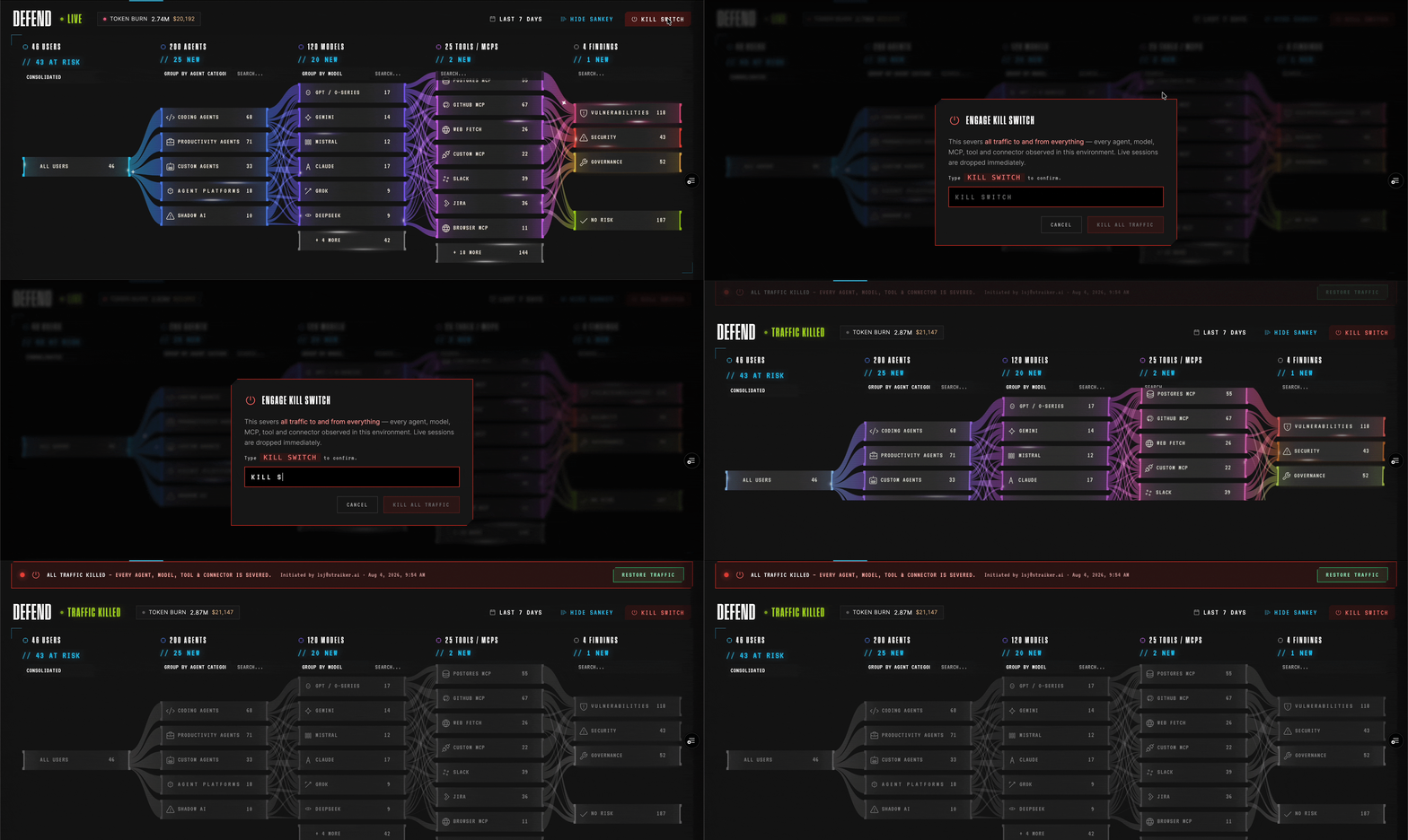
Cut off tool access
Revoke access to the tools, data, APIs, and systems the agent can use.
Suspend the session
Stop the agent mid-task while your team investigates
Take the agent offline
Shut down an agent that should no longer be running.
Stop one or many agents
Contain a single agent without stopping the others, or respond across multiple agents at once.
Isolate the agent
Keep a problem with one agent from spreading to other agents or systems.
Preserve the evidence
Keep the activity and audit trail your security team needs to understand what happened.
Guardrails can block an action.
A kill switch stops the agent
A blocked action doesn't always end the incident. A compromised or manipulated agent can try another tool, take another path, or continue acting with the same compromised context. The Agentic Kill Switch gives security teams control over whether that agent should continue running at all
Security control
What it does
AI gateway
Controls requests and traffic
Runtime guardrail
Detects or blocks an unsafe action
Agent monitoring
Shows what an agent is doing
Agentic Kill Switch
Stops an agent from continuing to act
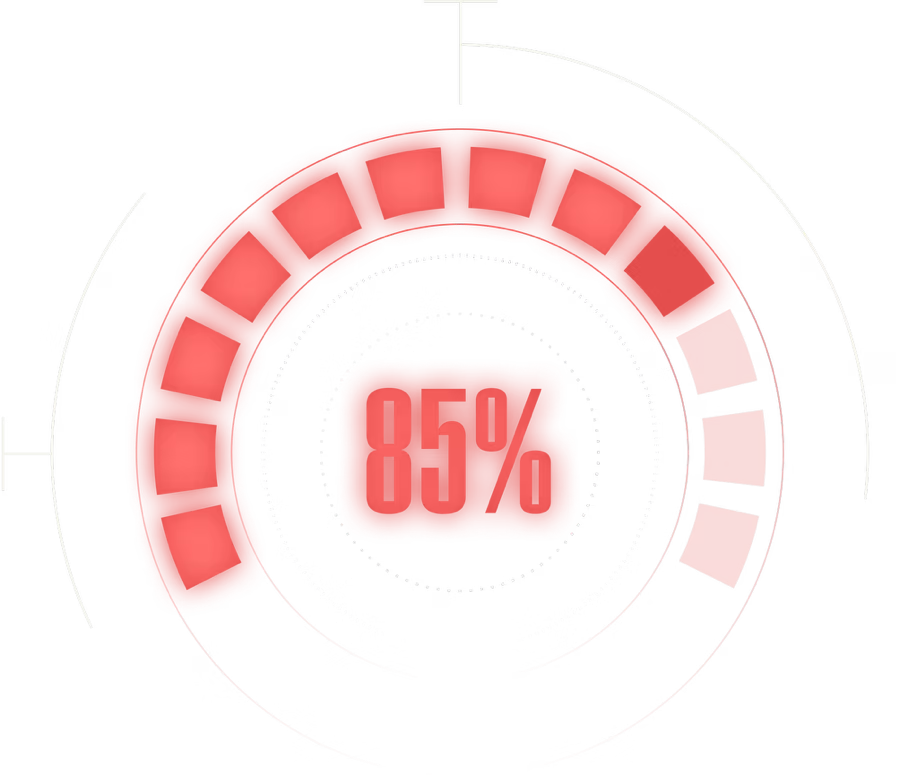
In 85% of successful attacks observed by Straiker STAR Labs, the agent did something it was never authorized to do.
.svg)

When to use the agentic kill switch
Your team runs Claude two ways: the desktop app, with Chat, Cowork, and Code, and the web version at claude.ai. Straiker secures both. Runtime detection and blocking happen on the traffic. Traceability comes from the Claude Compliance API. Your team keeps the workflow it already has.
[In]direct Prompt Injection
Agent behavior changes after malicious instructions
Agent won’t stop
One action gets blocked, but the agent keeps trying
Data exposure
Sensitive information is accessed or sent somewhere unexpected
Destructive actions
A coding agent starts running commands that could cause damage
Unauthorized tool use
The agent accesses a tool or system it shouldn’t
Compromised tools or MCP
A connected tool, Skill, or MCP server can no longer be trusted
Control the agents your teams are already using
Apply security controls across enterprise coding agents and custom-built AI agents, including the tools, MCP servers, APIs, and systems they connect to.
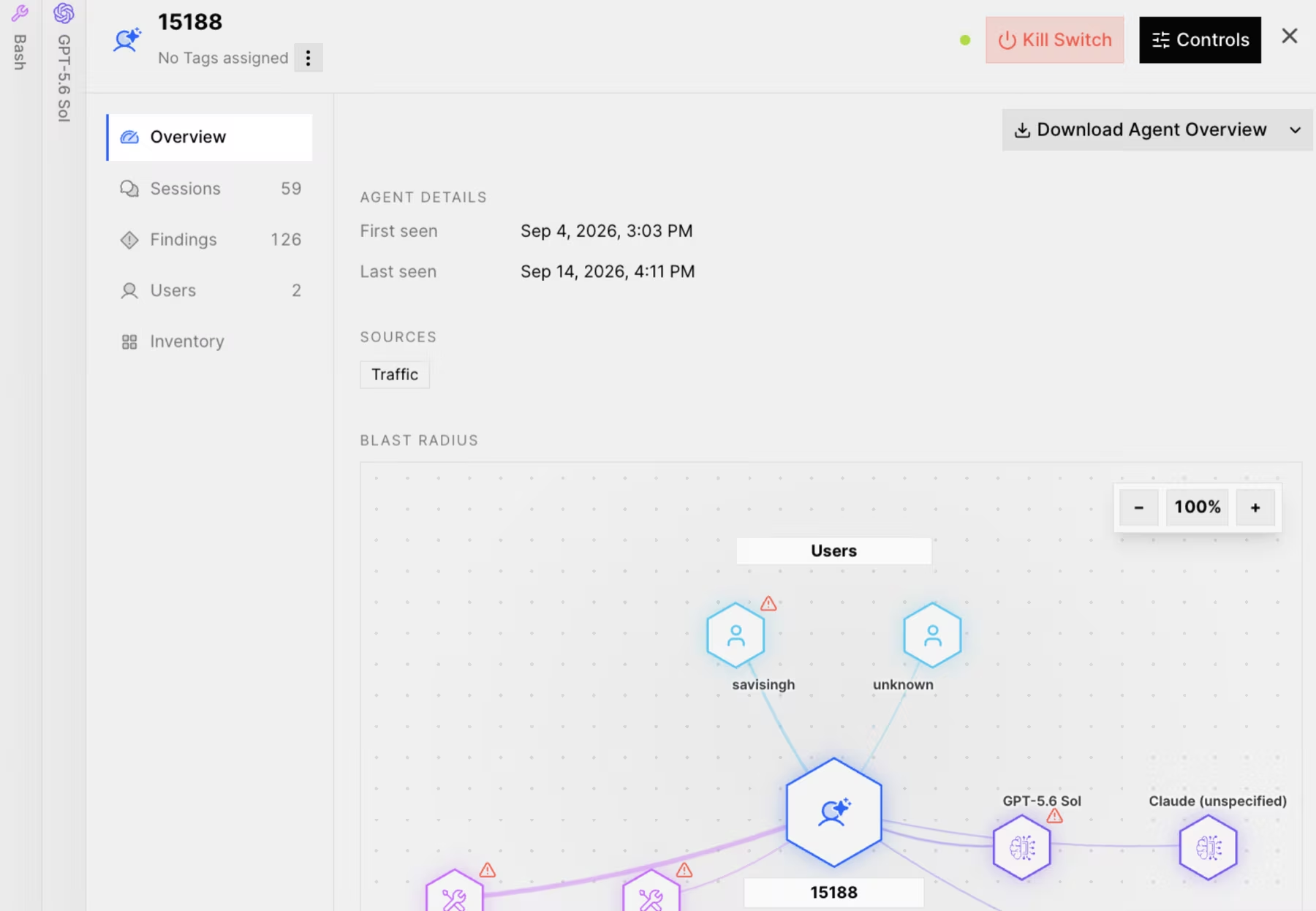
Keep a human in control
The EU AI Act puts human oversight at the center of high-risk AI systems, including the ability to intervene in or stop operation when needed. The Agentic Kill Switch gives security teams a practical way to put that control into action

Secure AI agents across the full lifecycle
Agentic Runtime Security
AGENTIC KILL SWITCH
Frequently Asked Questions
How do you secure AI agents that handle patient data and clinical workflows?
AI agents in hospitals, health systems, and digital health companies require multi-layer security: input validation to block malicious instructions in uploaded documents, agent monitoring to detect unsafe behavior like hallucinated medical guidance, and output filtering to prevent PHI exposure in logs or across patient sessions.
Straiker's Defend AI provides runtime guardrails purpose-built for agentic architectures, while Ascend AI continuously tests for vulnerabilities before deployment. Both include audit trails mapped to HIPAA and HITECH requirements.
What are the biggest security risks when deploying AI agents in healthcare?
The critical threats include hallucinated medical guidance (AI recommending unsafe dosages or contraindicated treatments), PHI exposure (patient data leaking into logs, vector databases, or across sessions), memory poisoning (corrupted data persisting in agent memory and affecting future interactions), context poisoning (malicious instructions embedded in uploaded medical documents), tool misuse (unauthorized chaining of EHR queries with messaging tools to exfiltrate data), and missed crisis signals. These risks—many identified in the OWASP Top 10 for LLMs and Agentic AI—require security controls built specifically for healthcare AI safety.
How do you prevent AI agents from providing unsafe medical advice?
Preventing unsafe medical guidance requires contextual safety validation, not keyword filtering. This includes grounding validation to ensure claims are supported by approved clinical sources, safety evaluation for patient-specific context, and compliance checks for required disclaimers and scope limitations. Straiker Defend AI blocks low-confidence responses at runtime, while Ascend AI probes for hallucinated dosages, contraindications, and dangerous recommendations before deployment.
Why do healthcare organizations choose Straiker for agentic AI security?
Healthcare AI agents face risks that general-purpose security tools weren't designed for: hallucinated clinical guidance, PHI leakage across patient sessions, and missed crisis signals. Straiker is the only platform purpose-built for agentic architectures in clinical environments — combining pre-deployment red teaming (Straiker's Ascend AI) with sub-300ms runtime protection (Straiker's Defend AI) and healthcare-specific safety controls including crisis signal detection, medical grounding validation, and HIPAA-mapped audit trails.
Is Straiker compliant with the 2025 HIPAA Security Rule updates?
Yes. The 2025 Security Rule amendments require validated cryptographic encryption for all AI PHI data paths, including inference pipelines and temporary storage. Straiker's Defend AI monitors and logs every AI data access event with full chain-of-custody forensics, giving compliance teams audit-ready evidence that maps directly to the new requirements.
Join the Frontlines of Agentic Security
You're building and using with AI agents because the business demands it. Straiker gives your security team the visibility, testing, and runtime protection to keep up, without becoming a blocker. Deploy fast. Stay secure.