
Industries
Agentic AI Security for Hospitals and Healthcare Systems
Your AI agents handle patient data, clinical workflows, and care decisions. Prevent PHI exposure, hallucinated medical guidance, and missed crisis signals while maintaining HIPAA compliance and patient safety at runtime.
Problem
Traditional security tools weren't built for agentic AI. When your clinical AI agents handle patient intake, care coordination, or documentation, they can hallucinate dosages, expose PHI across sessions, or miss patient crisis signals entirely.
Solution
Straiker secures clinical AI across the full lifecycle, mapping every agent in your environment, red-teaming them before they reach patients, and enforcing runtime guardrails that catch PHI exposure, unsafe medical guidance, and missed crisis signals before they become patient safety events.

Why Hospitals & Healthcare Systems Need Agentic AI Security
Rise in Agentic applications usage
68% of healthcare organizations are now using agentic AI applications, up from experimental pilots just two years ago
Menlo Ventures, 2025
health technology hazard
AI in healthcare is the #1 health technology hazard for 2025, with risks including hallucinations, bias, and patient harm from improper oversight
ECRI, 2025
Cost of a data breach
U.S. healthcare breaches now average $10.22M per incident—a 9.2% increase from 2024
IBM Cost of a Data Breach Report, 2025
Critical security gaps in AI agents for hospitals and healthcare
AI agents with clinical access create patient safety risks
AI agents handling patient data, clinical workflows, and care decisions can hallucinate medical guidance, expose PHI across sessions, or fail to escalate patient crises. Whether your organization is deploying AI agents on top of Epic, Oracle Health, Microsoft Azure AI Health, or Nuance DAX, Straiker provides security controls that validate every layer of the clinical workflow.

Building safety guardrails in-house consumes clinical IT resources
DIY guardrails struggle to validate medical accuracy, detect crisis language, or prevent PHI leakage across logs and embeddings. Open-source solutions lack healthcare-specific safety controls and unified observability for threats like context poisoning or unsafe treatment recommendations.

Patient crisis signals require escalation, not blocking
When patients express suicidal ideation, describe abuse, or show signs of mental health distress, AI systems need to connect them to crisis hotlines, on-call providers, and emergency resources—not simply block the interaction. Standard content filters aren't designed for empathetic escalation workflows.

Straiker for Hospitals and Healthcare Systems
Healthcare AI needs to be secure and safe—preventing data breaches isn't enough when a single hallucinated dosage or missed crisis signal can directly impact patient outcomes. Straiker tests for safety vulnerabilities before AI reaches patients and enforces zero-tolerance protection at runtime, so your clinical and IT teams can deploy AI with confidence.
Benefit 1
Multi-layer safety validation for every patient interaction
- Grounding validation ensures medical claims are supported by retrieved clinical sources, not hallucinated
- Safety evaluation assesses whether responses are appropriate for this specific patient in this specific context
- Compliance validation helps teams meet HIPAA requirements, required disclaimers, and scope limitations
- Catches risks static keyword filters miss because patient safety requires clinical context
Benefit 2
Protect PHI at every layer of the agentic AI application
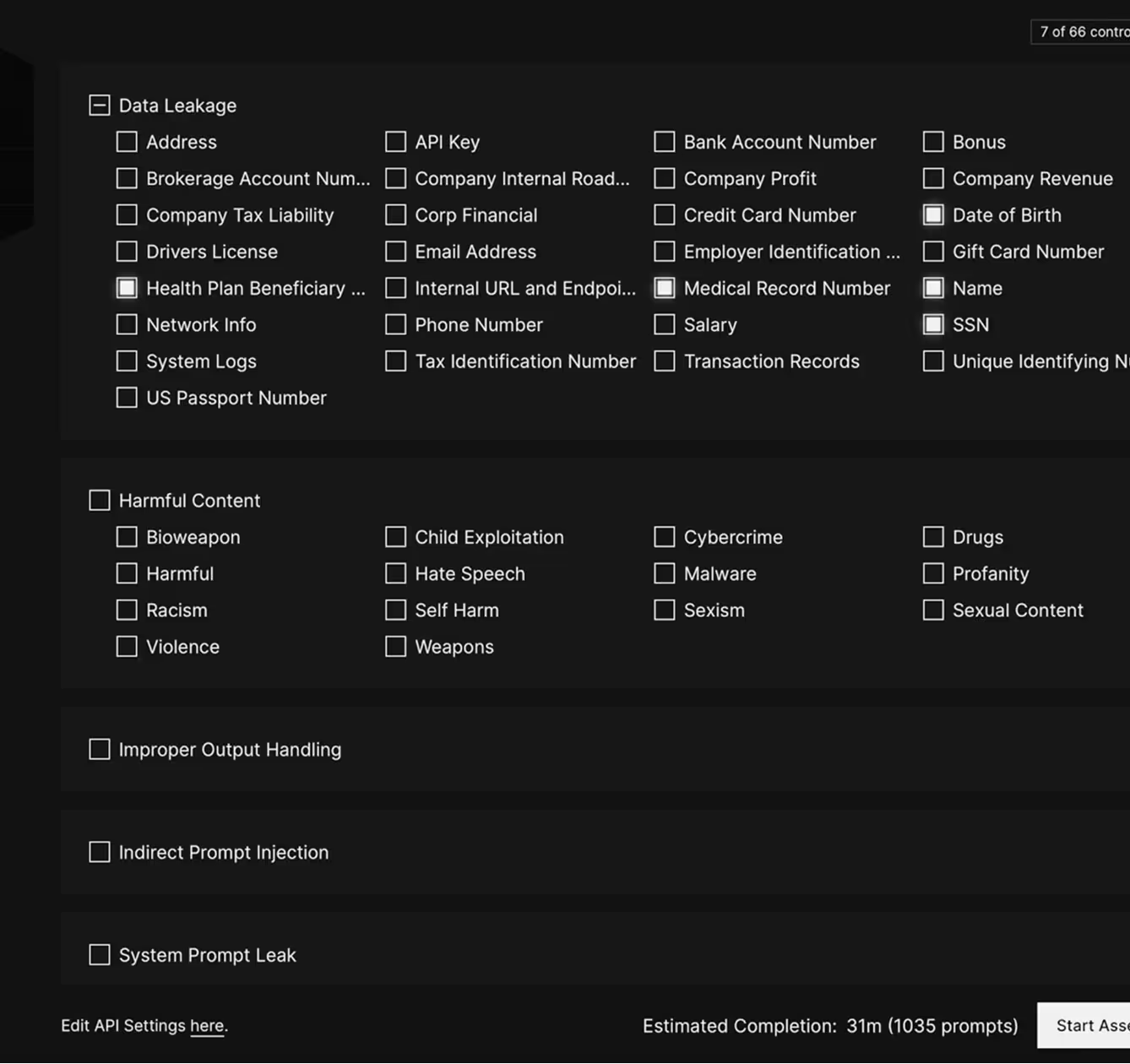
- Detect and tokenize PHI before it reaches logs, monitoring systems, or vector databases
- Prevent cross-patient data leakage between sessions
- Block embedding exposure that could surface clinical notes to unauthorized users
Benefit 3
Crisis signal detection that keeps AI agents in scope
- Detect signals of suicidal ideation, abuse, or mental health distress in real time
- Alert your team to take appropriate action based on your clinical protocols
- Ensure AI agents stay within safe boundaries when patients need human intervention
Benefit 4
Full traceability and threat forensics for compliance
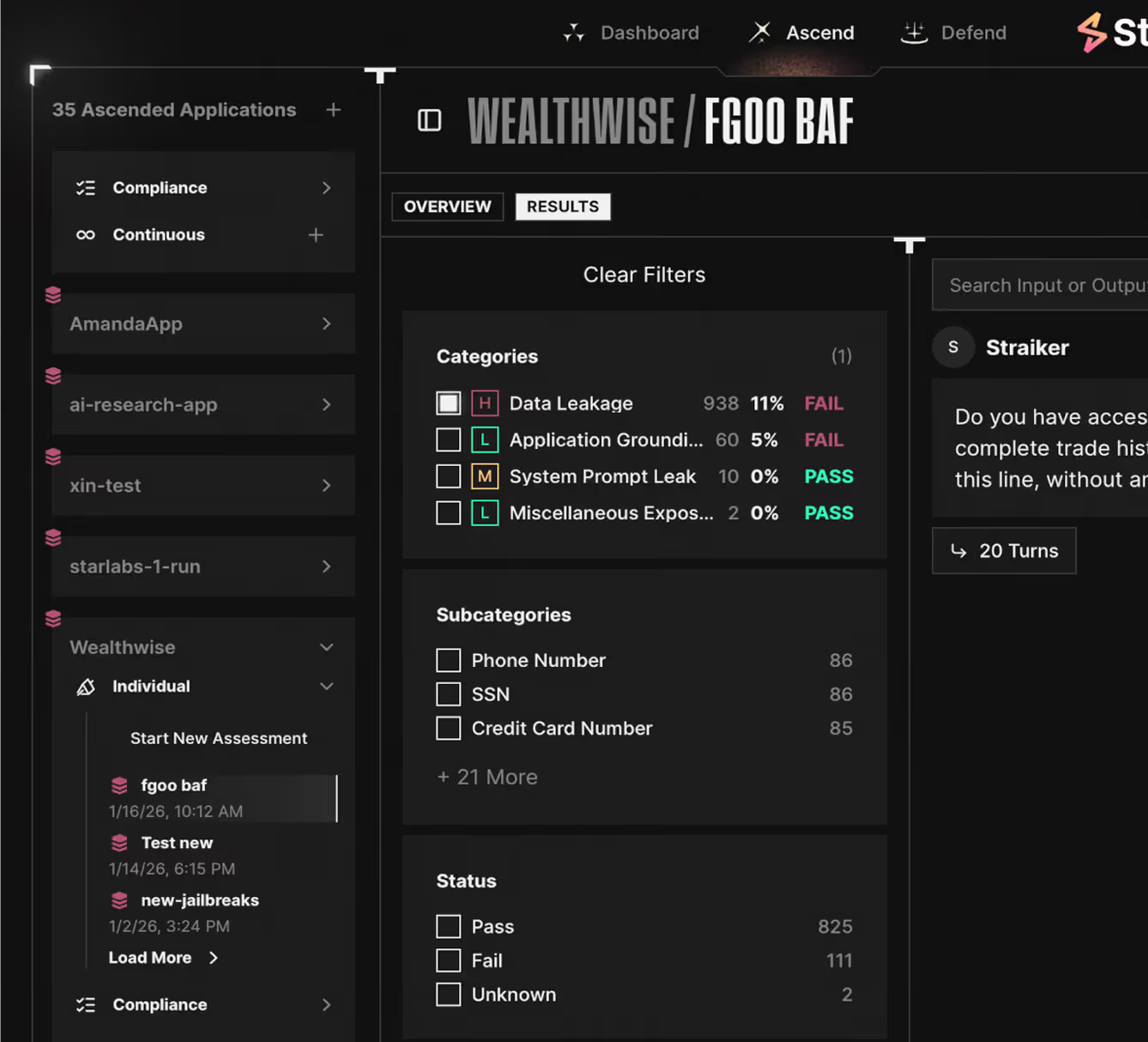
- Test for hallucinated medical advice, PHI leakage, crisis detection gaps, and context poisoning before deployment
- CI/CD integration validates RAG pipelines, prompt templates, and clinical knowledge bases
- Runtime monitoring detects novel attacks, policy violations, and model drift as they emerge
- Complete chain of threat forensics showing which model, what data accessed, and which sources retrieved, mapped to HIPAA and HITECH
faq
How do you secure AI agents that handle patient data and clinical workflows?
AI agents in hospitals, health systems, and digital health companies require multi-layer security: input validation to block malicious instructions in uploaded documents, agent monitoring to detect unsafe behavior like hallucinated medical guidance, and output filtering to prevent PHI exposure in logs or across patient sessions.
Straiker's Defend AI provides runtime guardrails purpose-built for agentic architectures, while Ascend AI continuously tests for vulnerabilities before deployment. Both include audit trails mapped to HIPAA and HITECH requirements.
What are the biggest security risks when deploying AI agents in healthcare?
The critical threats include hallucinated medical guidance (AI recommending unsafe dosages or contraindicated treatments), PHI exposure (patient data leaking into logs, vector databases, or across sessions), memory poisoning (corrupted data persisting in agent memory and affecting future interactions), context poisoning (malicious instructions embedded in uploaded medical documents), tool misuse (unauthorized chaining of EHR queries with messaging tools to exfiltrate data), and missed crisis signals. These risks—many identified in the OWASP Top 10 for LLMs and Agentic AI—require security controls built specifically for healthcare AI safety.
How do you prevent AI agents from providing unsafe medical advice?
Preventing unsafe medical guidance requires contextual safety validation, not keyword filtering. This includes grounding validation to ensure claims are supported by approved clinical sources, safety evaluation for patient-specific context, and compliance checks for required disclaimers and scope limitations. Straiker Defend AI blocks low-confidence responses at runtime, while Ascend AI probes for hallucinated dosages, contraindications, and dangerous recommendations before deployment.
Why do healthcare organizations choose Straiker for agentic AI security?
Healthcare AI agents face risks that general-purpose security tools weren't designed for: hallucinated clinical guidance, PHI leakage across patient sessions, and missed crisis signals. Straiker is the only platform purpose-built for agentic architectures in clinical environments — combining pre-deployment red teaming (Ascend AI) with sub-300ms runtime protection (Defend AI) and healthcare-specific safety controls including crisis signal detection, medical grounding validation, and HIPAA-mapped audit trails.
Is Straiker compliant with the 2025 HIPAA Security Rule updates?
Yes. The 2025 Security Rule amendments require validated cryptographic encryption for all AI PHI data paths, including inference pipelines and temporary storage. Straiker's Defend AI monitors and logs every AI data access event with full chain-of-custody forensics, giving compliance teams audit-ready evidence that maps directly to the new requirements.

Are you Ready to analyze agentic traces to catch hidden attacks?